
Bernardo Almada-Lobo
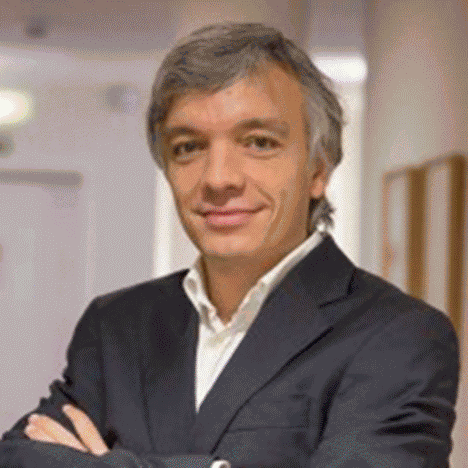
Universidade do Porto, Faculdade de Engenharia, INESC TEC
Rua Dr. Roberto Frias, s/n 4200-465 Porto, Portugal
almada.lobo@fe.up.pt
Prescriptive AI in Practice: Bridging Optimisation, Generative AI and Agentic Decision-Making
Abstract
Prescriptive AI, viewed through the lens of mathematical optimisation and operations research, addresses complex business decision-making problems involving limited resources, multiple decision options and competing objectives. This talk considers the full decision pipeline: problem framing, model formulation, computational solution, implementation, monitoring and organisational adoption.
The practical success of prescriptive AI depends less on algorithmic sophistication alone than on the quality of the translation between real-world decision contexts and formal optimisation models. In practice, this translation remains a major bottleneck. Objectives are often ambiguous, constraints are incomplete or tacit, data may be fragmented, and the operational consequences of a recommendation may be poorly understood. As a result, optimisation projects can fail even when the underlying mathematical model is technically sound.
The talk will address the persistent gap between optimisation theory and deployment practice. While optimisation has generated substantial value in domains such as supply chain planning, logistics, production, revenue management, workforce planning and inventory control, many initiatives still face a significant risk of under-delivery. Common failure modes include incorrect problem framing, weak data readiness, brittle assumptions, infeasible or non-actionable recommendations, limited explainability, insufficient ownership by business users and inadequate post-deployment monitoring. Crossing this gap requires moving from one-off model building to an operational lifecycle in which models are stress-tested, embedded in workflows, monitored for drift and revised as the business environment changes.
Recent developments in generative and agentic AI create new opportunities to reduce these barriers. Generative AI can support the elicitation of decision-maker preferences, the structuring of unstructured operational knowledge, the drafting of candidate formulations and the explanation of model outputs in business language. Agentic AI can extend this role by orchestrating multi-step workflows that involve model formulation, solver-code generation, execution, debugging, infeasibility diagnosis, sensitivity analysis and human review. However, these capabilities should not be interpreted as replacing optimisation expertise. Rather, they create a new interface between human judgement, analytical modelling and computational decision support.
This talk will discuss a cross-fertilisation agenda between optimisation, generative AI and agentic AI, with a focus on how these technologies should be calibrated to the decision at hand.
Short Bio
Full Professor of Industrial Engineering and Management at the Faculty of Engineering of University of Porto (FEUP). Co-founder and Partner at LTPlabs, a Business AI company. Member of the Board of Trustees of the Belmiro de Azevedo Foundation. Member of the Academy of Engineering. Former Board Member of INESC TEC and Researcher at the MIT Sloan School of Management. Holds a BEng, PhD and Habilitation in Industrial Engineering and Management from FEUP. Completed the Advanced Management Programme at INSEAD, and the Mergers and Acquisitions at London Business School. Certified Analytics Professional (CAP) by INFORMS.
His area of activity is Business Analytics and Artificial Intelligence. He researches, develops and implements analytical models and methods to support decision-making, solving management problems across various domains — manufacturing, consumer goods, retail and transport — with a particular focus on Operations Management and the Operations–Marketing interface.
He has coordinated and participated in more than 300 development, consultancy and research projects funded by private organisations, science agencies from several countries, the European Commission and regional bodies. He has published more than 100 scientific articles and is co-author of the book Analytics Sandwich: Bringing People and Artificial Intelligence Together to Unlock Business Value. He has supervised more than 20 doctoral theses.